Boulder Retaining Wall Built Straight, Solid, and Ready to Last
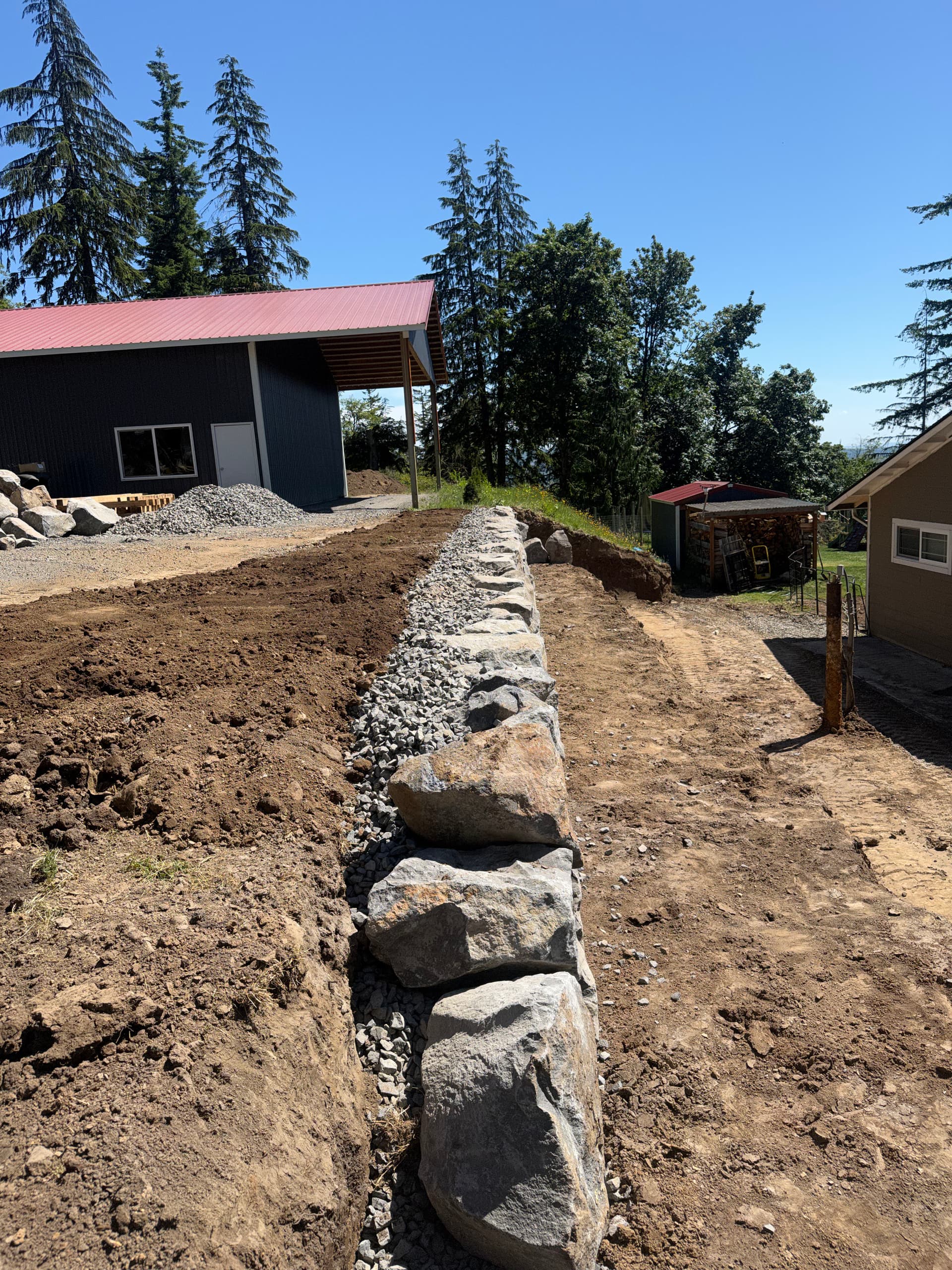
When a slope starts working against you, a boulder wall is one of the best ways to take control of it. Not just for looks - but to actually hold ground, manage water runoff, and keep your property where you want it. That's exactly what we set out to do here.
What you're seeing is a boulder retaining wall run along the edge of a graded slope between two structures. Every boulder is set with intention - tight contact points, crushed gravel packed in behind for drainage, and a clean face line that holds its shape from one end to the other. That straight, consistent run doesn't happen by accident. It takes careful placement and an eye for how the wall needs to perform, not just how it needs to look.
Here's the thing about boulder walls that most people don't think about upfront - the drainage behind the wall is just as important as the wall itself. Without it, water pressure builds behind the face and eventually pushes the whole thing over. The gravel you can see packed in along the base and behind the boulders is doing real work. It gives water somewhere to go so the wall can do its job long-term.
We work with natural boulders specifically because they handle the kind of load and ground movement that smaller block walls often can't. They're heavy, they lock together naturally, and they don't need mortar to stay put. When a retaining wall is built right, it becomes part of the land - not something fighting against it.
If you've got a slope, a drop-off, or erosion starting to become a problem on your property, a boulder wall is worth taking seriously. Built right, it holds up for decades with almost no maintenance required.